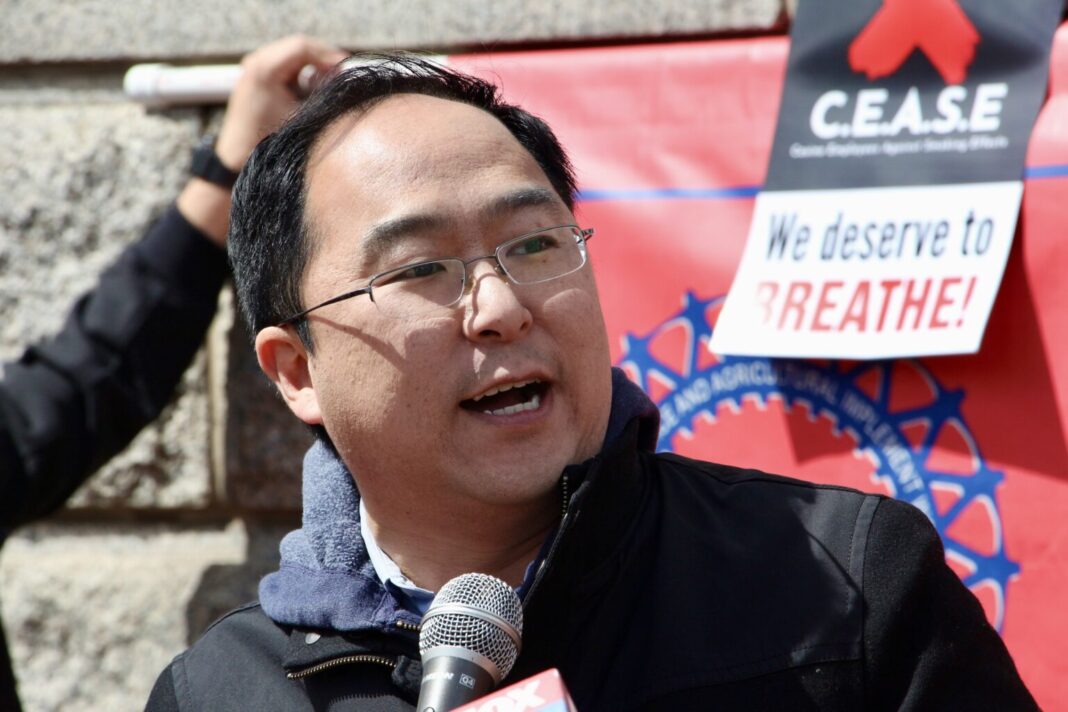
A year after Sen. Andy Kim rose to office on an anti-establishment message, New Jersey’s long-dominant political machinery is facing renewed pressure from insurgent candidates and reform-minded lawmakers. Recent elections, legislative battles, and growing voter engagement suggest that a movement once seen as symbolic is now reshaping the state’s political landscape.
Kim’s 2024 Senate victory marked a turning point. Running against Democratic power brokers and the long-criticized county line ballot system, he capitalized on frustration with insider politics. Since changes to the ballot layout took effect, primaries across New Jersey have grown more competitive, with higher turnout and more candidates willing to challenge party-backed favorites.
That shift was evident this fall in Jersey City, where Mayor-elect James Solomon defeated establishment-supported former Gov. Jim McGreevey by a wide margin in a runoff election. Two democratic socialist candidates also won city council races, unseating candidates aligned with McGreevey’s slate. The results underscored how anti-machine messaging is resonating with voters in one of the state’s largest cities.
Kim has not remained on the sidelines. Over the past year, he has endorsed and campaigned alongside insurgent candidates, weighed in on contested congressional primaries, and pledged to recruit challengers to longtime incumbents he sees as defenders of machine politics. He has also begun meeting with incoming state legislators, many of whom ran reform-focused campaigns, to discuss closer coordination between state and federal leaders.
Tensions between reformists and party leadership were on full display during a recent Statehouse hearing on a controversial bill that would have weakened the state comptroller’s investigative authority. The proposal drew sharp criticism from Kim, Attorney General Matt Platkin, and several incoming lawmakers. The backlash proved intense enough that Senate President Nick Scutari ultimately withdrew the legislation, citing public concerns.
The episode highlighted the growing influence of anti-establishment voices within Trenton. Supporters argue that the fight is not just about individual bills or candidates, but about restoring trust in government at a time when public confidence has eroded nationwide. Critics, however, accuse figures like Kim of wielding influence in ways that resemble the very power structures they oppose.
Beyond New Jersey, similar movements are gaining traction in other traditionally machine-driven states. But observers say the Garden State’s recent reforms, particularly the end of the county line system, have accelerated change. Former Jersey City school board member Mussab Ali said voters are increasingly evaluating candidates based on their appeal and ideas rather than party endorsements or political lineage.
The anti-machine energy is now spilling into congressional races, including a crowded Democratic primary to succeed Gov.-elect Mikie Sherrill. Candidates such as former Rep. Tom Malinowski and progressive organizer Analilia Mejia are framing their campaigns around transparency, accountability, and resistance to insider influence, even as county parties continue to wield organizational power.
Whether the movement can sustain its momentum remains an open question. Fundraising advantages, compressed election timelines, and entrenched party networks still shape outcomes, particularly in high-stakes races. Yet the recent string of victories and policy reversals suggests that New Jersey politics is entering a new phase, one where challenges to the establishment are no longer exceptions, but a defining feature of the state’s political conversation.