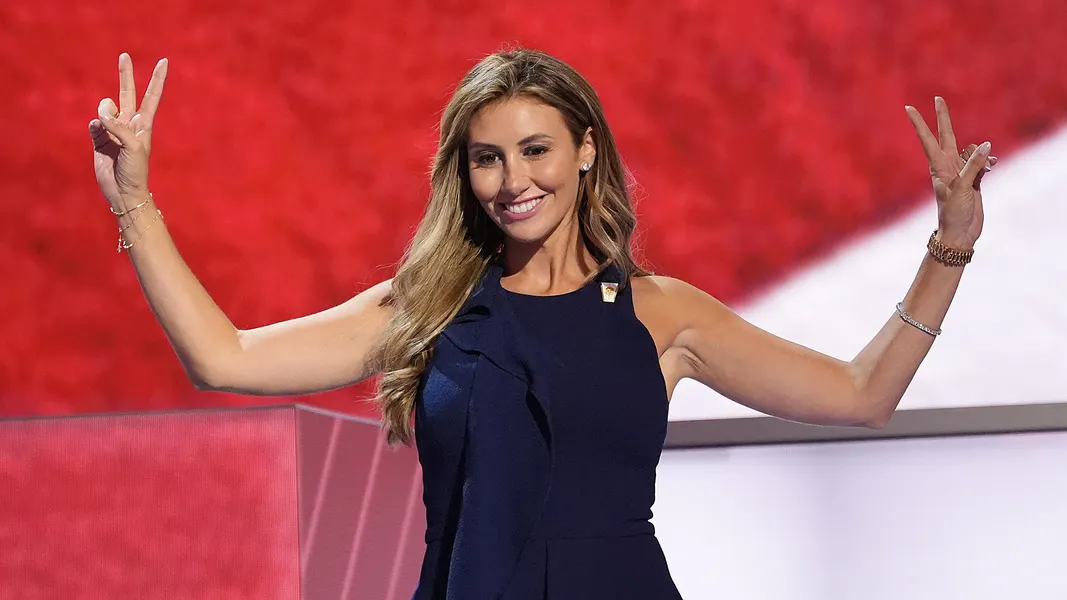
Alina Habba, President Donald Trump’s former personal attorney and the acting U.S. Attorney for the District of New Jersey, announced her resignation from the top federal prosecutor’s post on December 8, 2025. In a statement posted on social media, Habba framed her departure not as a defeat but as a deliberate choice made to protect the institution she led. The courts, however, had already made that choice for her.
“As a result of the Third Circuit’s ruling, and to protect the stability and integrity of the office which I love, I have decided to step down in my role as the U.S. Attorney for the District of New Jersey,” Habba wrote. “But do not mistake compliance for surrender. This decision will not weaken the Justice Department and it will not weaken me.”
The resignation came just one week after a three-judge panel of the U.S. Court of Appeals for the Third Circuit unanimously upheld a lower court ruling that found Habba had been serving in the position “without lawful authority.” The legal challenge centered on how she was appointed and whether that appointment violated the Federal Vacancies Reform Act, the federal statute that governs how temporary officeholders can fill vacant roles requiring Senate confirmation.
Habba was first installed as acting U.S. attorney for New Jersey in March 2025, a move that drew immediate scrutiny given her background as a personal defense attorney for Trump with no prior prosecutorial experience. New Jersey’s two Democratic senators, Cory Booker and Andy Kim, indicated early on that they would block her Senate confirmation. When her 120-day interim term expired in July, federal judges replaced her with her own chief deputy. The Justice Department responded by reinstating Habba through a series of legal maneuvers, which a federal judge in August ruled was carried out without legal authority. That ruling was upheld in December by the Third Circuit.
In her resignation statement, Habba placed the blame squarely on the judiciary and New Jersey’s Democratic senators, accusing judges of becoming “weapons for the politicized left” and asserting that their rulings had halted criminal trials and left “violent criminals on the streets.” She also invoked a personal connection to the state, closing her statement with the line, “Make no mistake, you can take the girl out of New Jersey, but you cannot take New Jersey out of the girl.”
Despite stepping down from the New Jersey post, Habba did not leave the Department of Justice. Attorney General Pam Bondi announced that Habba would remain as “Senior Adviser to the Attorney General for U.S. Attorneys,” and added that the department would continue to seek further review of the court’s decision. Bondi stated that if those appeals succeed, Habba “intends to return to lead the U.S. Attorney’s Office for the District of New Jersey.”
In a joint statement, Senators Booker and Kim welcomed the departure, calling it the close of a “troubling chapter” and urging the administration to nominate a qualified candidate for the role through the proper Senate confirmation process. “Habba’s installation through an irregular and unlawful process undermined the credibility of the office and eroded the public’s trust in the state’s chief federal prosecutor,” the senators said.
The situation left New Jersey, home to one of the most active and prominent federal prosecutor’s offices in the country, in a prolonged period of uncertainty. The district oversees approximately 170 federal attorneys and handles a wide range of criminal cases, including public corruption, organized crime, and financial fraud. Following Habba’s resignation, the Justice Department installed a leadership trio to run the office, though that arrangement was also subsequently challenged in court.
The Habba episode became one of the most visible examples of the broader tension between the Trump administration’s efforts to install political allies in key law enforcement roles and federal statutes requiring Senate oversight of those appointments. The legal questions raised by her case are expected to continue working their way through the courts.