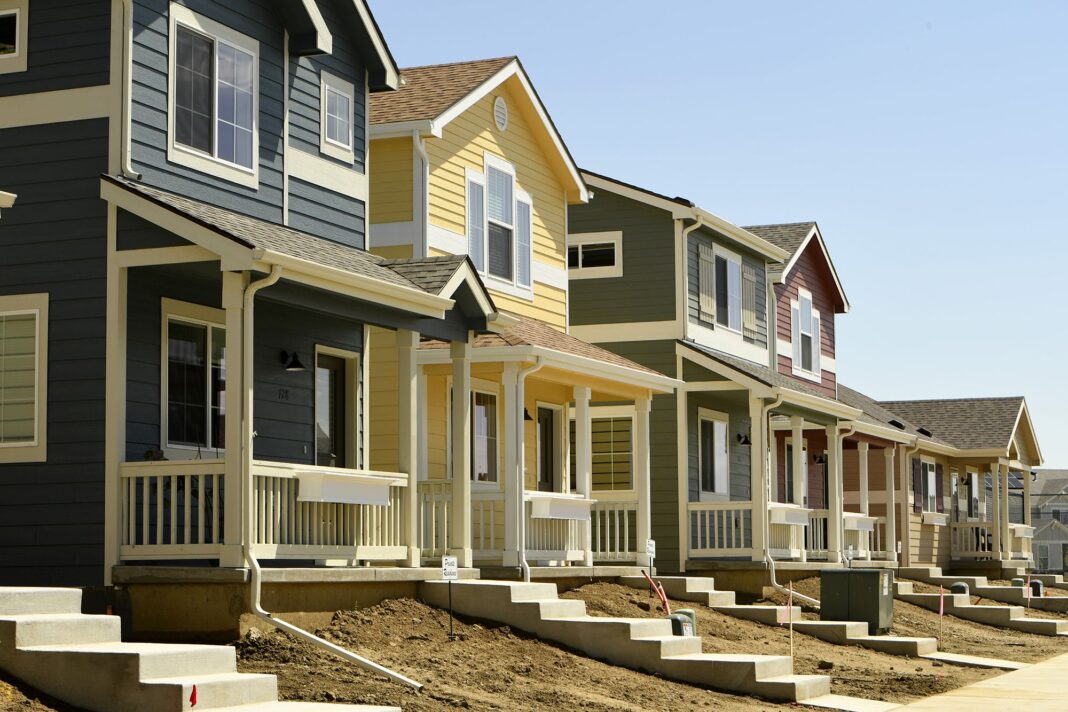
Governor Mikie Sherrill signed Executive Order No. 17 on Monday, April 27, directing every major state agency to coordinate on a single mission: build more homes, lower costs, and cut through the red tape that has kept New Jersey’s housing supply dangerously short for years. The order, signed at the Statehouse in Trenton within the governor’s first 100 days in office, sets in motion what the administration is calling a whole-of-government approach to one of the state’s most pressing economic challenges.
“We can’t make New Jersey more affordable without making housing more affordable,” Sherrill said at the signing. “With this Executive Order, we are aligning every tool at our disposal to accelerate housing production and make it easier for families to put down roots in the communities they love.”
The order establishes a Housing Governing Council, which must be operational by June 11. The council will be chaired by the state’s chief operating officer and co-chaired by the Department of Community Affairs, the New Jersey Housing and Mortgage Finance Agency, the Economic Development Authority, and NJ Transit. Its mandate is to coordinate across state government and remove the bureaucratic and regulatory barriers that have historically slowed housing development in the state.
By June 27, all state agencies and authorities are required to submit written reports to the Governor’s Office identifying concrete steps they can take to speed up home construction, increase transparency in state permitting processes, and identify underutilized or vacant state-owned land that could be developed into new housing units. The council must then issue formal recommendations on five key housing issues by September 24, the same date on which Sherrill’s administration plans to publicly release a comprehensive statewide housing strategy at a Governor’s Housing Conference.
The backdrop for the order is a housing market that has placed New Jersey among the least affordable states in the nation. A March 2026 report from the Housing and Community Development Network of New Jersey and the National Low Income Housing Coalition found the state has only 34 affordable homes for every 100 extremely low-income renter households. Three-quarters of extremely low-income renters in the state spend more than half of their income on rent. A full-time worker in New Jersey needs to earn nearly $40 an hour to afford the average fair market rent on a two-bedroom apartment, according to the same coalition. A 2024 study from Harvard University ranked New Jersey eighth worst in the nation for housing cost burden, with residents paying at least 30 percent of their income toward housing.
Legislative leaders from both chambers offered support. Assembly Majority Leader Lou Greenwald described the situation as urgent, noting that housing supply has not kept pace with demand and that transit-oriented development would help workers live closer to their jobs while enabling businesses to attract and retain talent. Senator Troy Singleton, chair of the Senate Community Affairs Committee, welcomed the order while emphasizing that supply remains the central obstacle, calling for modernized zoning laws and the removal of development barriers. Senator Benjie Wimberly of the 35th Legislative District, whose communities have been significantly affected by rising housing costs, said the order addresses conditions that working families, seniors, and veterans in his district face daily.
Housing advocates echoed the legislative response. Adam Gordon, executive director of the Fair Share Housing Center, said the order builds on a 2024 state law requiring towns to update their affordable housing plans, and praised the governor’s focus on transit-adjacent construction and development on public land. Peter Kasabach of New Jersey Future framed the problem directly, stating that affordability has suffered because there are simply not enough homes available at price points that match what residents can realistically afford.
Sherrill’s proposed budget for fiscal year 2027 supports the order with $70 million earmarked for the Affordable Housing Trust Fund, which assists first-time homebuyers with down payments.
One notable presence at the signing ceremony was Jamie Ding, a multifamily and tax credit program administrator at the New Jersey Housing and Mortgage Finance Agency who is currently in the middle of a 31-game winning streak on Jeopardy. Sherrill introduced him as “a champion both of housing and Jeopardy,” drawing applause from the room. Ding offered a characteristically straightforward endorsement of the measure:
“Housing is good. People need somewhere to live.”
With the order now signed, state agencies are expected to begin coordinating immediately, with the full housing plan to follow by September.